
Guide · Anxiety in driving lessons
What helps against fear of the first driving lesson, test anxiety and the fear of driving alone?
Everyone talks about exam nerves. Most people stay silent about the rest: tears after a driving lesson, a racing heart before the motorway, a driving instructor who raises their voice, the fear of making a fool of oneself – or the fear of driving alone after passing the test. The forums are full of it, the driving school websites are empty. We are changing that right now: an honest guide to anxiety in driving lessons – no clichés, with concrete ways out.
- First the most important message: you are not wrong
- Fear of the first driving lesson
- Crying during a driving lesson: an embarrassing isolated incident? No.
- When the driving instructor is the problem
- Exam anxiety: what actually helps (instead of “just chill”)
- When fear is greater: anxiety disorders, panic attacks & co.
- The forgotten fear: driving alone after passing your test
- Frequently Asked Questions
- Conclusion: Fear is a training issue, not a verdict
First the most important message: you are not wrong
Learning to drive means being a beginner as an adult, in front of an audience, in an environment that feels dangerous, whilst being assessed by a stranger. The fact that this causes anxiety is neither a weakness nor an unusual occurrence – it is the normal reaction of a healthy nervous system to a genuine challenge. Driving instructors often encounter nervous, tearful, doubting learners every week. What feels like an embarrassing isolated incident inside your head is just everyday life from the driving school's perspective – and easily manageable.
Fear of the first driving lesson
The most common fear – and the most unfounded: The first lesson takes place in a quiet environment, the car has twin pedals, and there is nothing to get through. What exactly happens (and why you cannot make a fool of yourself), we have explained step by step in the guide The first driving lesson Written down. The best single tip: tell your driving instructor in the very first sentence that you're nervous – then they'll adjust the pace and exercises, and you don't have to put on a front.
Crying during a driving lesson: an embarrassing isolated incident? No.
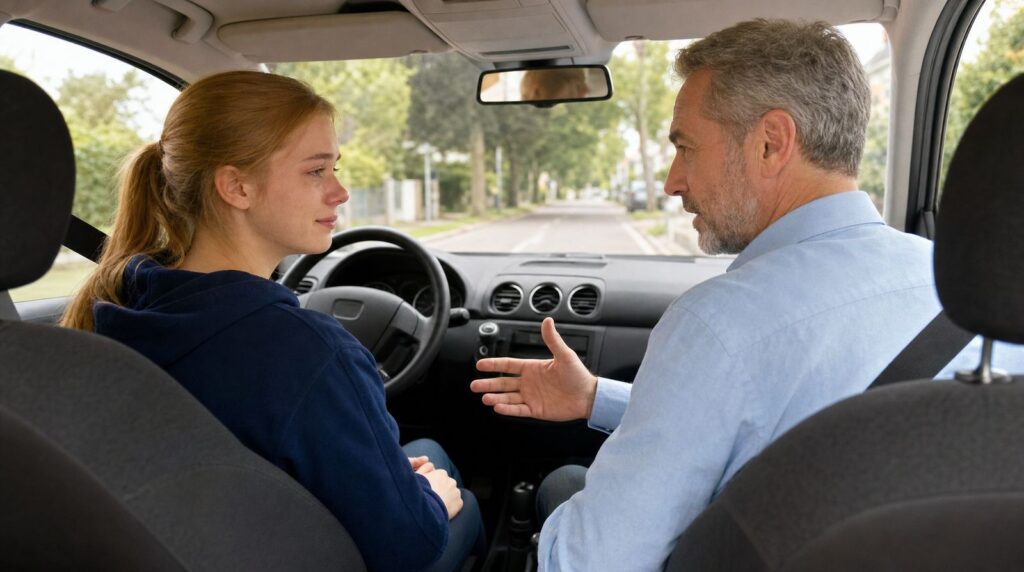
Hardly any subject fills the forums quite as sheepishly as this one – so let's make it crystal clear: Crying during driving lessons happens regularly, in teenagers as in adults. They are a sign of being overwhelmed in that moment – not of incompetence, not of being “too weak for driving”. A good reaction from the driving instructor: pull over, take a break, take the pressure off, simplify the exercise. If you notice that it regularly becomes too much for you, bring it up outside of the lesson: smaller steps of learning, quieter practice areas or a different lesson format (shorter, but more often) almost always solve the problem. Crying is a signal to adapt the teaching – not a reason to quit.
When the driving instructor is the problem
Now for the uncomfortable part that driving schools are reluctant to write down: A driving instructor who yells at you, humiliates you, or intimidates you is not “strict” – they are bad at their job. Anxiety has been proven to block the exact brain function you need for learning; therefore, intimidation is not only unpleasant, but pedagogically counterproductive. Your step-by-step plan:
- 1. Approach – sometimes it is thoughtlessness, not a system: “When you raise your voice, I can no longer think. Please tell me calmly.”
- 2. Changing driving instructor – within the driving school. A completely routine request requiring no justification; a sentence in the office is enough.
- 3. Change driving school. You can take your lessons and your theory test with you – how that works is explained in the guide Change driving school. To be carried forward to FAHRPLAN.
Clearly separate from that: A driving instructor who corrects calmly, points out mistakes and occasionally gets stern when it comes to safety is doing exactly the right thing. The difference lies not in the clarity, but in the respect.
Exam stress: what actually helps (instead of “just chill out”)
“Just relax” has never helped anyone. This has:
- Knowledge beats fear: The biggest fear driver is the misconception that every mistake means the end. Not true – what you are allowed to do wrong (stalling, steering corrections, repeating a basic driving task) is listed in the guidebook Fault in the practical test. This knowledge is the most effective tranquilliser of all.
- Exam simulation: Two or three driving lessons that run exactly like the test (driving instructor remains silent, directions given only according to road signs) – the test situation loses its unfamiliarity before it counts.
- Routine over ritual: Rigid schedule on exam day – same wake-up time, something to eat, warm-up round. Nervousness loves chaos, routine deprives it of fertile ground.
- Systematic breathing: Four seconds in, six seconds out, repeat three times – at every red traffic light. This is not esotericism, but simple physiology: prolonged exhalation slows the pulse.
- Knowing the figures: Around a third fail the practical test – and are allowed to retake it as many times as they like. The test is important, but it's not a final boss: even the worst-case scenario is just a predictable detour.
When fear is greater: anxiety disorders, panic attacks & co.
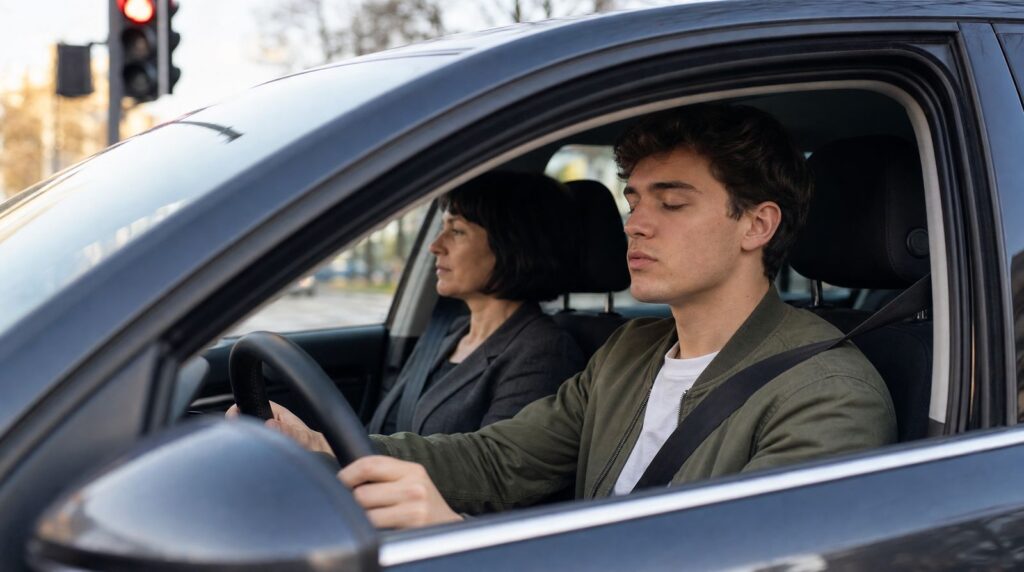
Some don’t bring just “normal” nervousness, but a diagnosed anxiety disorder, panic attacks or bad prior experiences (such as an accident). Here are three honest statements about this: Firstly isn't that an automatic obstacle to getting a driving licence – many people with an anxiety disorder drive safely and enjoy driving. Secondly Does honesty help? You don't have to disclose a diagnosis, but a sentence like “I need smaller steps and advance notice instead of surprises” allows the driving instructor to react properly. Thirdly is it okay to get support – driving anxiety is one of the most common topics for traffic psychologists and specialised coaches, and the combination of therapy/coaching plus a patient driving school has helped very many people reach their goal. Getting help here is a strategy, not a surrender.
The forgotten fear: driving alone after passing your test
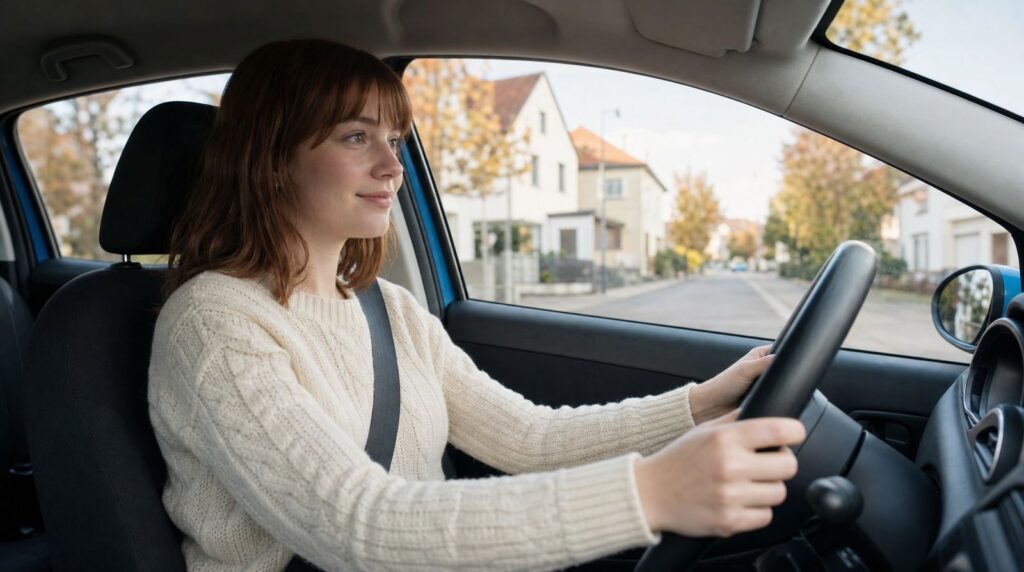
Hardly anyone talks about it, yet very many know it: you have your driving licence – and the thought of driving off without a passenger makes your throat tighten. That too is normal (the test confirms your ability, not your sense of security – that only comes through driving) and quite solvable: phased plan – first familiar short trips at quiet times, then with a trusted passenger, then alone; every journey makes the next one easier. Anyone who likes can book a few Refresher lessons after getting your driving licence – that's nothing to be ashamed of, it's just practical safety sense, much like a defensive driving course. There is only one thing that matters: driving. A driving licence that stays tucked away in a drawer out of fear becomes harder to use with every passing month.
Frequently Asked Questions
Should I tell my driving instructor about my anxiety?
Yes – as early as possible. Driving instructors can only react to what they know, and good instructors specifically tailor their choice of exercises, pace and tone. Hiding anxiety costs you lessons; naming it saves them.
Can I get a special exam because of exam anxiety?
The exam itself runs the same way for everyone. All the more important is the preparation: exam simulations, knowing the error tolerance, and booking an exam date only when exam readiness is stable – not “just to give it a go”.
I dropped out of the apprenticeship due to fear. Can I come back?
Any time – and you are less alone in this than you think. How returning to it after a break works in practice (and what of your old lessons still counts) is in the guide Driving licence at 30, 40 or 50.
Read more
Conclusion: Fear is a training issue, not a verdict
Every fear in this text follows the same blueprint: it shrinks through knowledge, small steps and the right people by your side – and it grows through secrecy, comparison and avoidance. Find a driving school where you are allowed to be openly nervous; everything else is just a craft.
The overview shows what specifically awaits you during the apprenticeship This is how you get your driving licence.