
Guide · First driving lesson
What happens in the first driving lesson, what do you need for it, and how do you deal with the nerves?
Hardly any appointment causes as much anxiety as the first driving lesson – and hardly any is so harmless. The fear almost always comes from the same misconception: that you have to know how to do something there. Here is the honest answer about what really happens in the first driving lesson – step by step, including the worries that almost everyone has and hardly anyone says out loud.
- First of all: nobody expects you to be able to do anything
- What you need – and what you don't
- How the first driving lesson works – step by step
- Dual control: your safety net
- The most common worries – answered honestly
- After the lesson: How to get the most out of it
- And after that? The second and third driving lessons
- Three tips for dealing with nerves before an appointment
- Frequently asked questions about the first driving lesson
- Conclusion: The anxiety about the first driving lesson is worse than the first driving lesson itself
First of all: nobody expects you to be able to do anything
That is not an empty platitude, but your driving instructor's working basis: the first driving lesson is designed so that you starting from scratch. Driving instructors start every week with people who have never sat behind the wheel – shaky knees, mixed-up pedals and stalled engines are standard practice, not the exceptions. You cannot make a fool of yourself in your first driving lesson, because there is simply nothing there to pass.
What you need – and what you don't
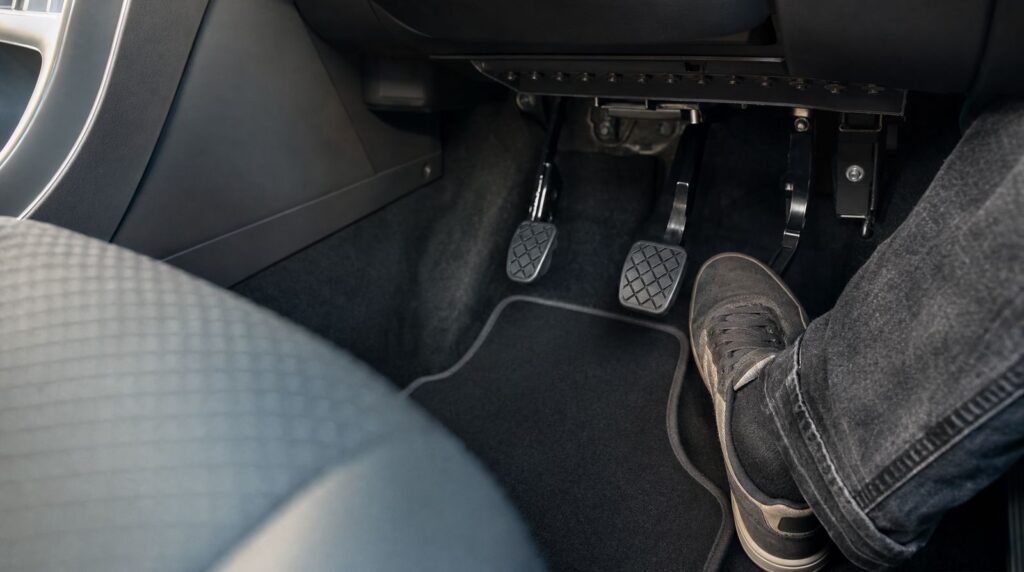
- Sturdy, flat shoes: Trainers are perfect. Flip-flops, high heels or chunky platform soles make pedal work unnecessarily difficult.
- Glasses or contact lenses, in case you need glasses.
- Comfortable clothing and – more important than anything else – sufficient sleep.
- No need: Prior knowledge, completed theory lessons (driving lessons run concurrently with theory) or an already approved driving licence application – you can start your driving lessons immediately after registration. You can only take the test once the application has been approved.
How the first driving lesson works – step by step
- 1. Meeting and picking up: Usually the driving instructor picks you up at an agreed meeting point – and drives themselves to a quiet practice area with little traffic first. So you don't have to worry about ending up straight in the rush hour.
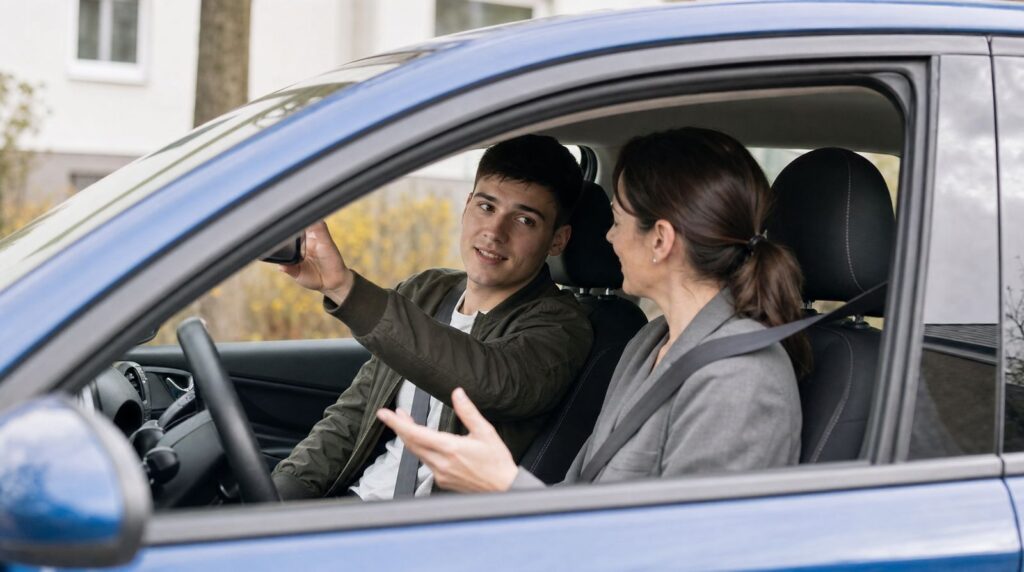
- 2. The adjustment round: Seat, steering wheel, mirrors, seatbelt – sounds basic, but it's real lesson content: the correct seating position determines pedal feel and visibility, and you'll need the routine you build from it right up to the test.
- 3. Operation explained: Pedals, gear shifters (or indeed not – with the automatic car the clutch is omitted completely), indicators, lights, handbrake. All while stationary, without any time pressure.
- 4. The first role: Pulling away at walking pace, braking gently, pulling away again. In a manual car, this is the clutch-learning phase – and yes, you'll stall. Everyone does. Multiple times. That's exactly what the exercise is for.
- 5. First rounds: Steering, wider bends, perhaps the first quiet roads with priority to the right. Your driving instructor tells you what to do at all times – you don't have to decide anything yourself.
- 6. Final interview: Brief feedback on what went well and what comes next. Typical conclusion after 45 or 90 minutes: “That was significantly more relaxed than expected.”
Dual control: your safety net
The most important fact against fear: The driving school car has dual controls on the passenger side. Your driving instructor can brake, use the clutch and, if necessary, take the steering wheel at any time – and they will do so before a situation gets hairy. In your first driving lesson, you practically cannot break anything: not the car, not the traffic, not yourself. This safety architecture is the reason learner drivers are allowed to learn in real traffic right from the very first metre.
The most common worries – answered honestly
- “What if I keep stalling?” Then you are like almost everyone. Stalling isn't a mistake when learning to use the clutch, it's just part of the learning curve – and with an automatic, that issue doesn't exist at all.
- “What if I shake or feel sick?” Just say it. Driving instructors know all about nervousness in every form and will then bring in a break or a calmer exercise. Anxiety is the normal state for the first lesson – in our experience, it disappears somewhere between minute 15 and 30.
- “What if I can't remember anything?” You don't have to. Everything important will be repeated – the first lesson is an introduction, not a test.
- “What if I'm much worse than others?” There is no “good” or “bad” in the first driving lesson – just different starting points. How many lessons it takes in the end is as individual as skiing – the honest figures on that can be found in the guide How many driving lessons do you actually need?
After the lesson: How to get the most out of it
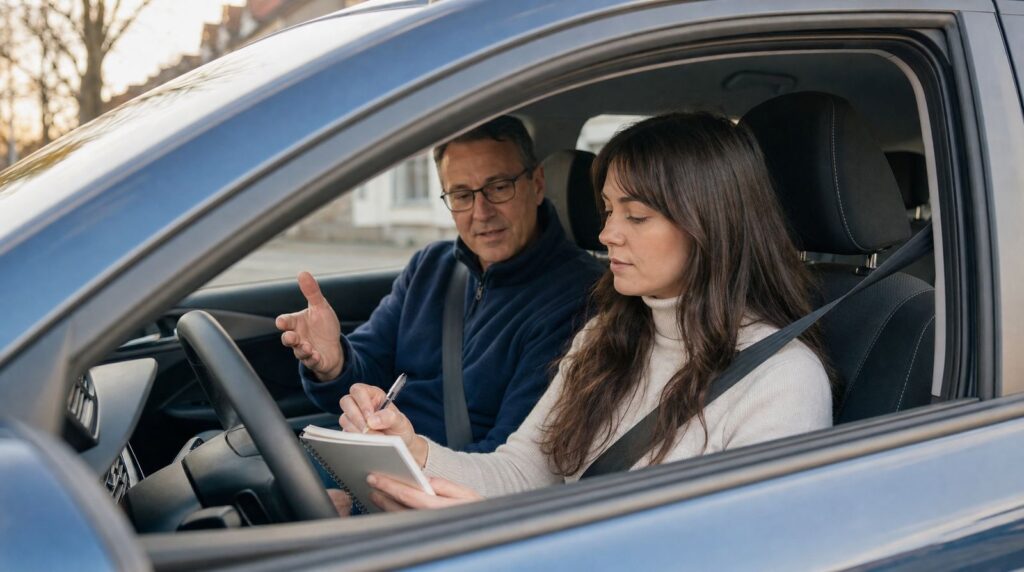
Three small habits that save hard cash from hour one: Debrief (really listening to the driving instructor's feedback, instead of nodding along in relief), two-minute notes (what went well, what I'll practise next time – anchors what was learned measurably better) and schedule the next appointment promptlyOne to two sessions a week is the rhythm at which what has been learned does not evaporate between lessons.
And after that? The second and third driving lessons
So that you know what's coming: over the next few hours, the “start calm, slowly build up” pattern will repeat. Hours two and three consolidate moving off, gear-changing and steering, and venture into straightforward residential traffic – right-before-left, first traffic lights, first turns. Your driving instructor only ever increases the difficulty once you've mastered the current stage, so you'll never be sent into situations you aren't ready for. A good reality anchor: most learner drivers already describe hour three as “normal” – the state of emergency from the first hour rarely lasts longer than two sessions.
Three tips for dealing with nerves before an appointment
- Schedule the lesson on a relaxed day: Don't squeeze it in between an exam and a dentist appointment – your first driving lesson deserves a day when your mind is clear.
- Be a passenger intentionally beforehand: Take a close look at the feet and hands of your parents or friends – when do they use the clutch, how much do they steer? That builds a first sense of it, entirely without pressure.
- Tell your driving instructor that you're nervous. That's not a weakness, but useful information – he adjusts the pace and exercise selection. The sentence “I'm quite nervous” is the best icebreaker of the entire training.
Frequently asked questions about the first driving lesson
From when am I allowed to take my first driving lesson?
Right after registering at the driving school – you neither need to have completed theory lessons nor have the approved driving licence application in your pocket. Theory and practice run in parallel; only the tests require the application or the passed theory exam.
Single lesson or double lesson to start with?
Both are possible. Many start with a double lesson (90 minutes) – otherwise settling in eats up a large part of the short lesson. Anyone who is very nervous can consciously begin with 45 minutes.
Can I choose an automatic car for the first lesson?
Yes – and for many people, this is the most stress-free way to get started, as there’s no need to use the clutch or change gears. Whether you stick with the B197 or switch to a manual gearbox later on is up to you – the guide explains the details B197 or manual?
How much does a driving lesson cost?
That varies by region – you can find our current prices displayed transparently on the Pricing page.
Read more
Conclusion: The anxiety about the first driving lesson is worse than the first driving lesson itself
Quiet practice area, dual controls, zero expectations – the first driving lesson is the gentlest lesson of your entire training. The only mistake you can make is to keep putting it off out of fear. You can read about what happens next in the guides How many driving lessons do you need? and Special training drives explained.
The overview shows what happens after the first driving lesson This is how you get your driving licence.